What a session looks like
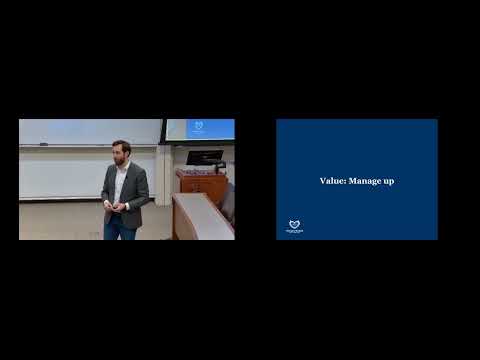
Small Things That Make You Easy to Network With
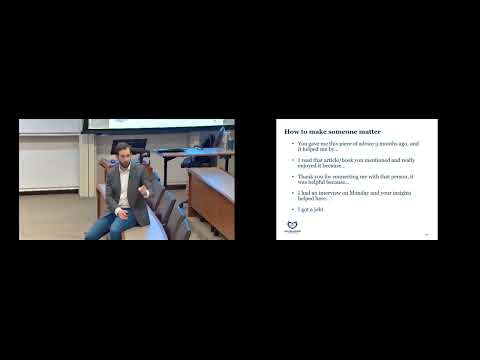
How to Make an Executive Feel Like They Matter
For college students and young professionals, networking can seem overwhelming, transactional, and gross – even though it has never been more important for internships, jobs, and finding mentors.
Value-Based Networking changes the paradigm of networking: instead of asking “What can this person do for me?”, start by asking “How can I provide value to them?”
(And yes, even a college kid using Value-Based Networking can provide value to a CEO.)
And done the right way, AI can make networking easier, too. AI can reduce the administrative work that networking requires, so anyone can spend more time doing what AI can’t: building strong relationships.
Most networking advice is about events. Go to the mixer, work the room, collect business cards. It turns people into checkboxes instead of relationships. Students and young professionals can feel that, which is one reason so many of them avoid networking.
AI has made looking for a job even more miserable. Anyone can send a hundred messages and applications that look personalized, and everyone receiving them can tell.
Small Things That Make You Easy to Network With
How to Make an Executive Feel Like They Matter
AI can eliminate much of the work that makes networking feel exhausting, so people spend less time researching and more time talking to people.
The challenge is that few people know how to do this.
I teach students how to use AI without sounding like AI, and how to automate the repetitive work that keeps them from actually building relationships.
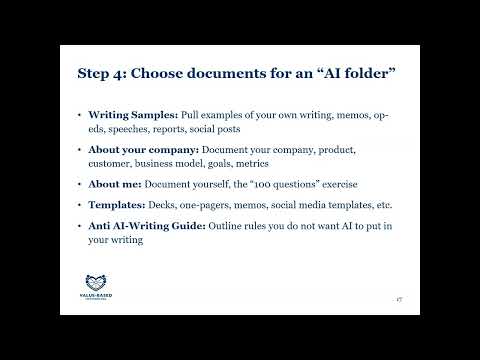
Teaching AI to Stop Sounding Like AI
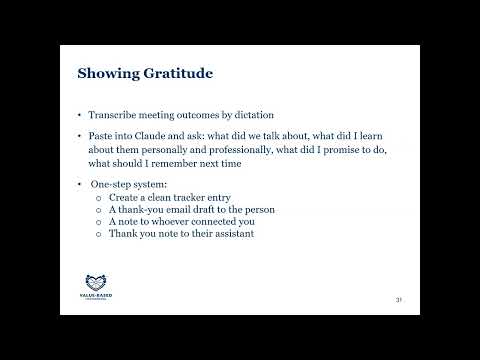
Automating Gratitude
Every student and cohort is different. I’ll tailor the workshop to individual or groups of students, from a single 60-minute session up to a semester-long series.


If you have ever thought, “I should probably be taking networking more seriously, but I don’t know how to do that without feeling like a slimeball,” this will be a great event for you. It reframed how I thought about networking and is full of actionable advice.
This is gold.

My name is Adam Newman, and I’m an introvert who struggled with traditional networking events. I built a different approach to networking focused on providing value first and creating better outcomes for everyone involved.
Since 2017, I have worked with and lectured to Notre Dame students, mostly liberal arts majors who emailed me cold asking how to turn a political science degree into a job. I recently formalized my talks, habits, and tips as Value-Based Networking.
My career has spanned Illinois government, politics, and nonprofits. I graduated magna cum laude from Notre Dame and have an MBA from Booth. I’m an Eagle Scout and interview at the Youth Job Center in Evanston.
I live in the Chicago suburbs with my wife, my favorite person to network with by a wide margin. Our cats, Maisy and Macaroni, have mixed feelings about the ranking.